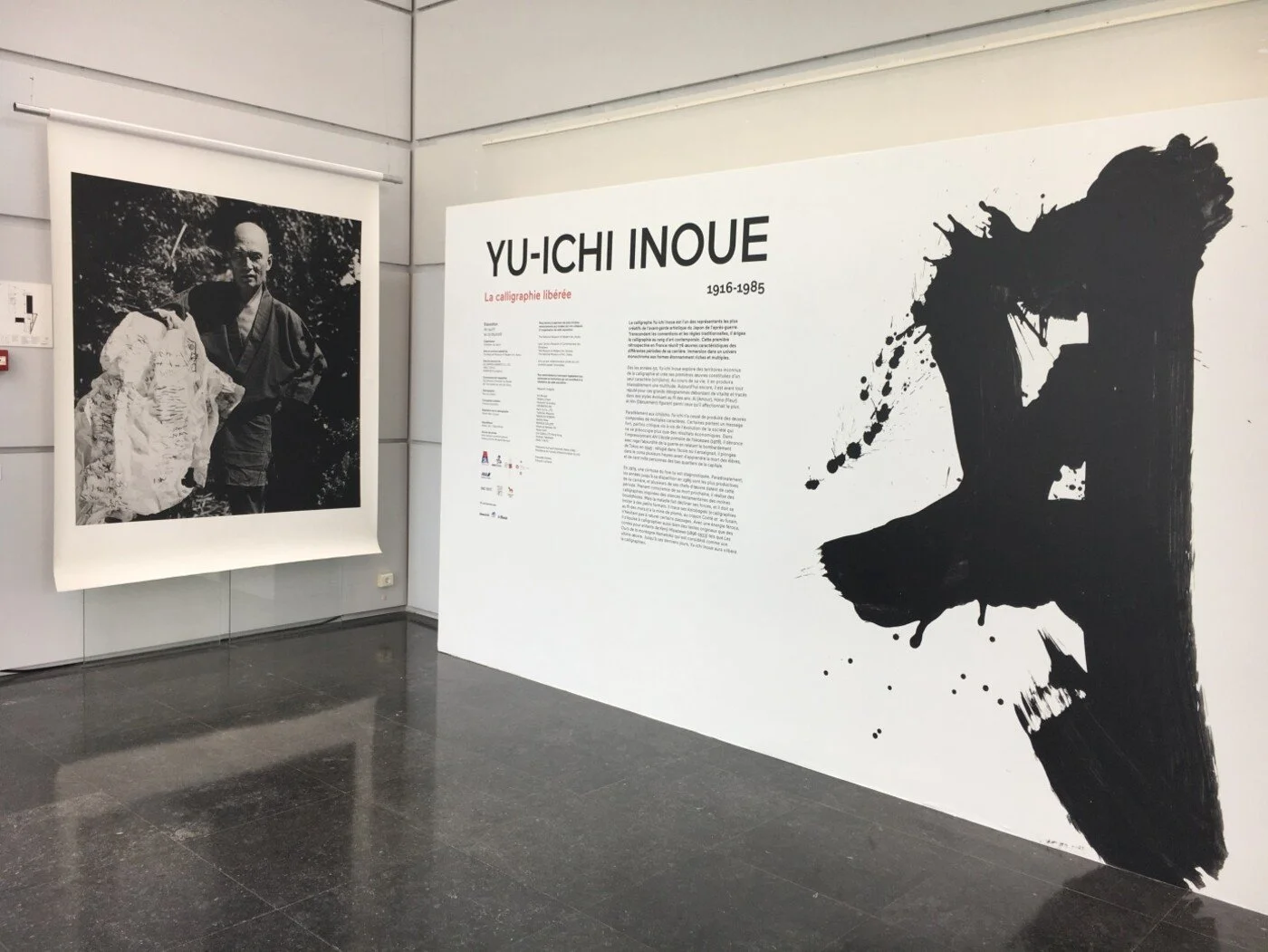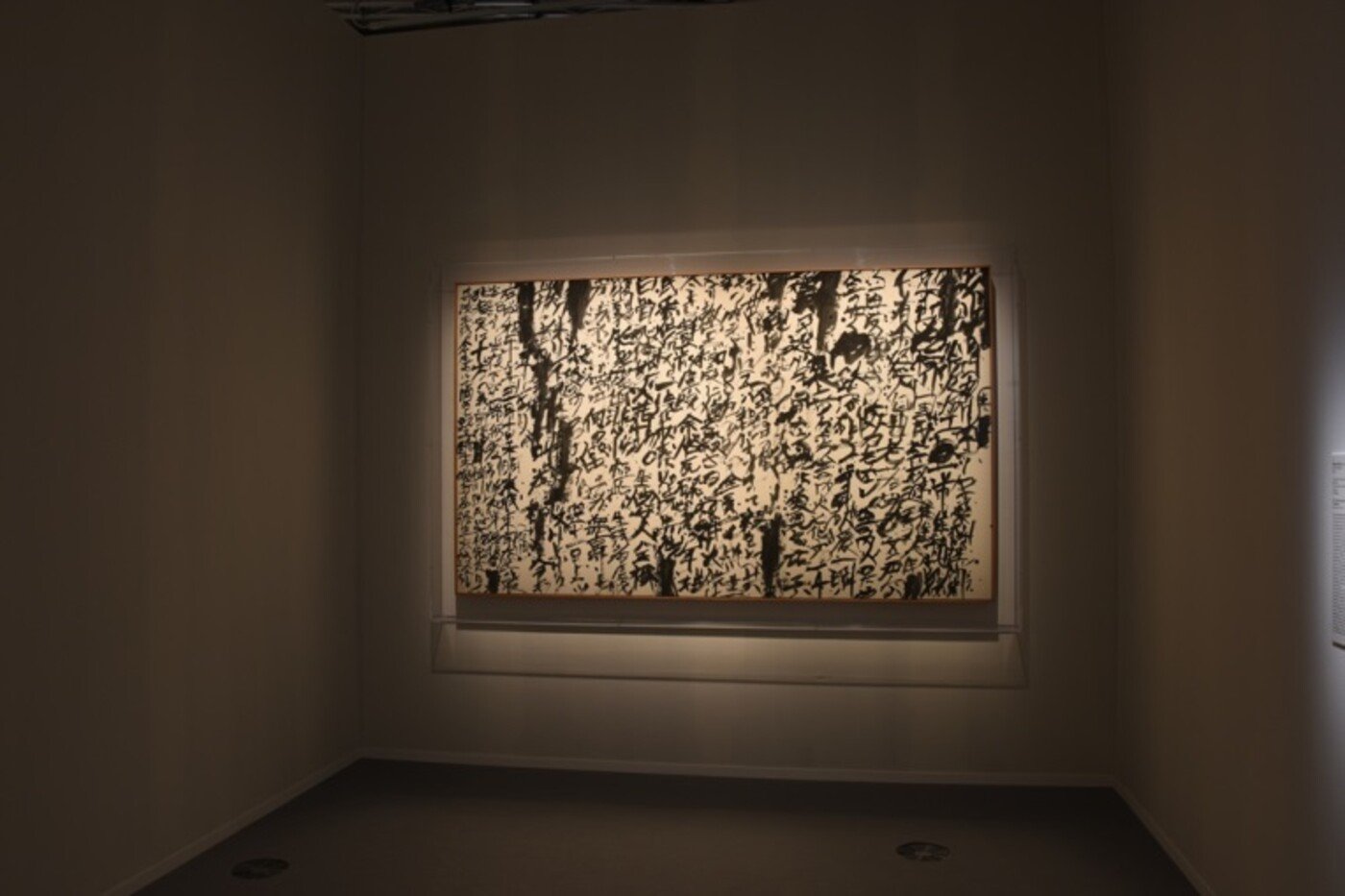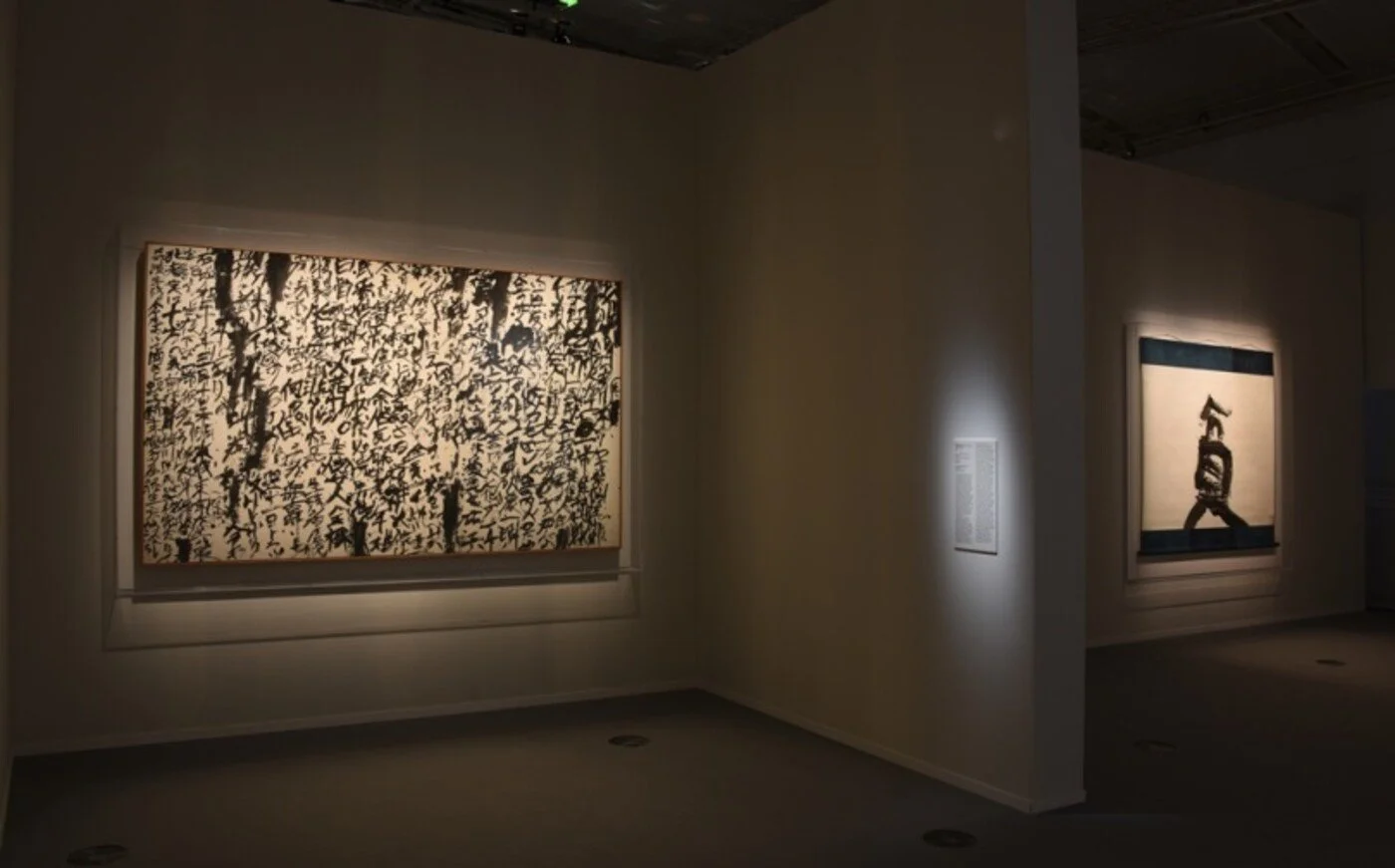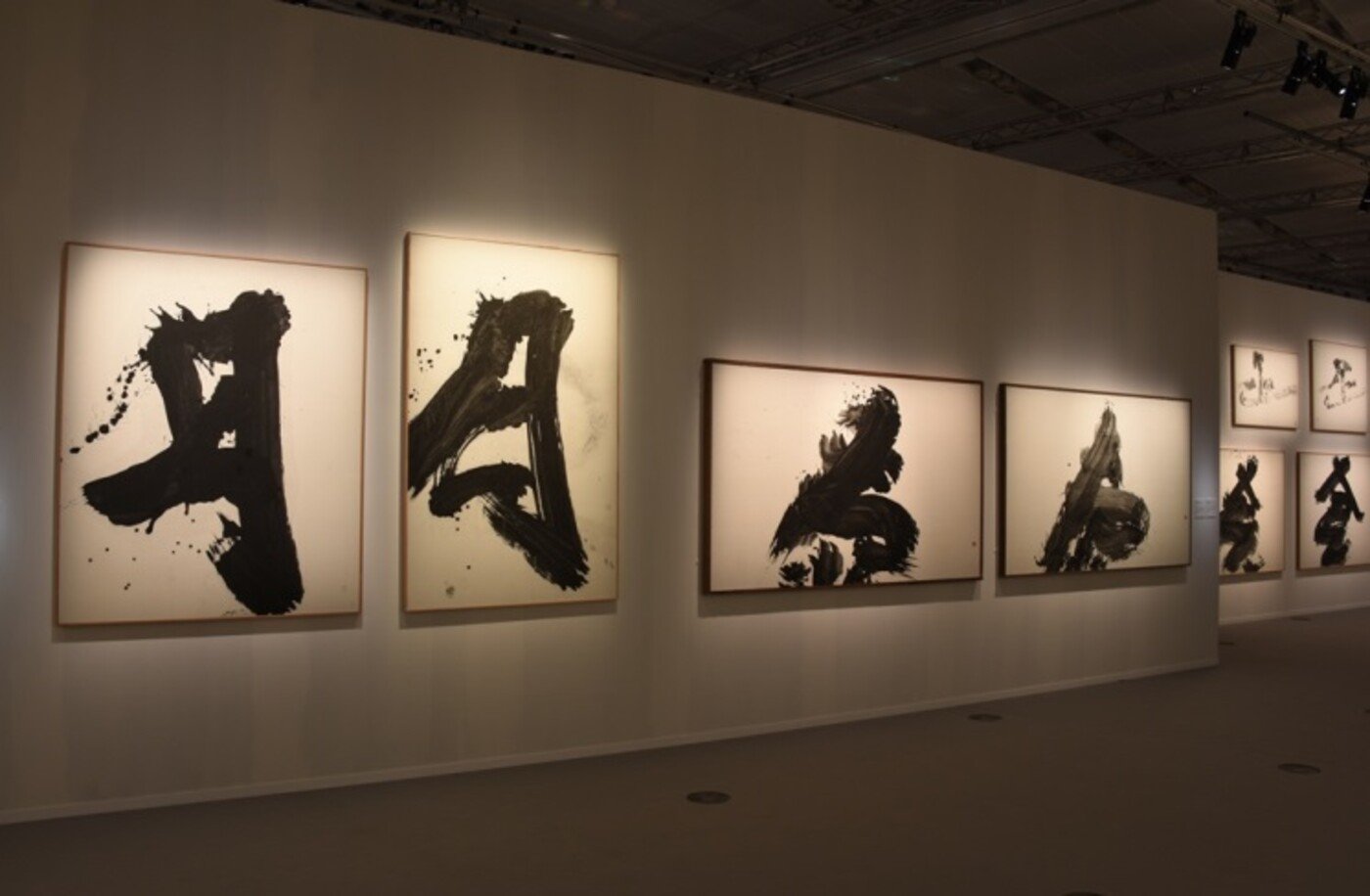
Yu-ichi Inoue — La Calligraphie Libérée, Japonismes 2018, Paris & Albi
Yu-ichi Inoue — la calligraphie libérée (Official Japonismes 2018 Program A-5)
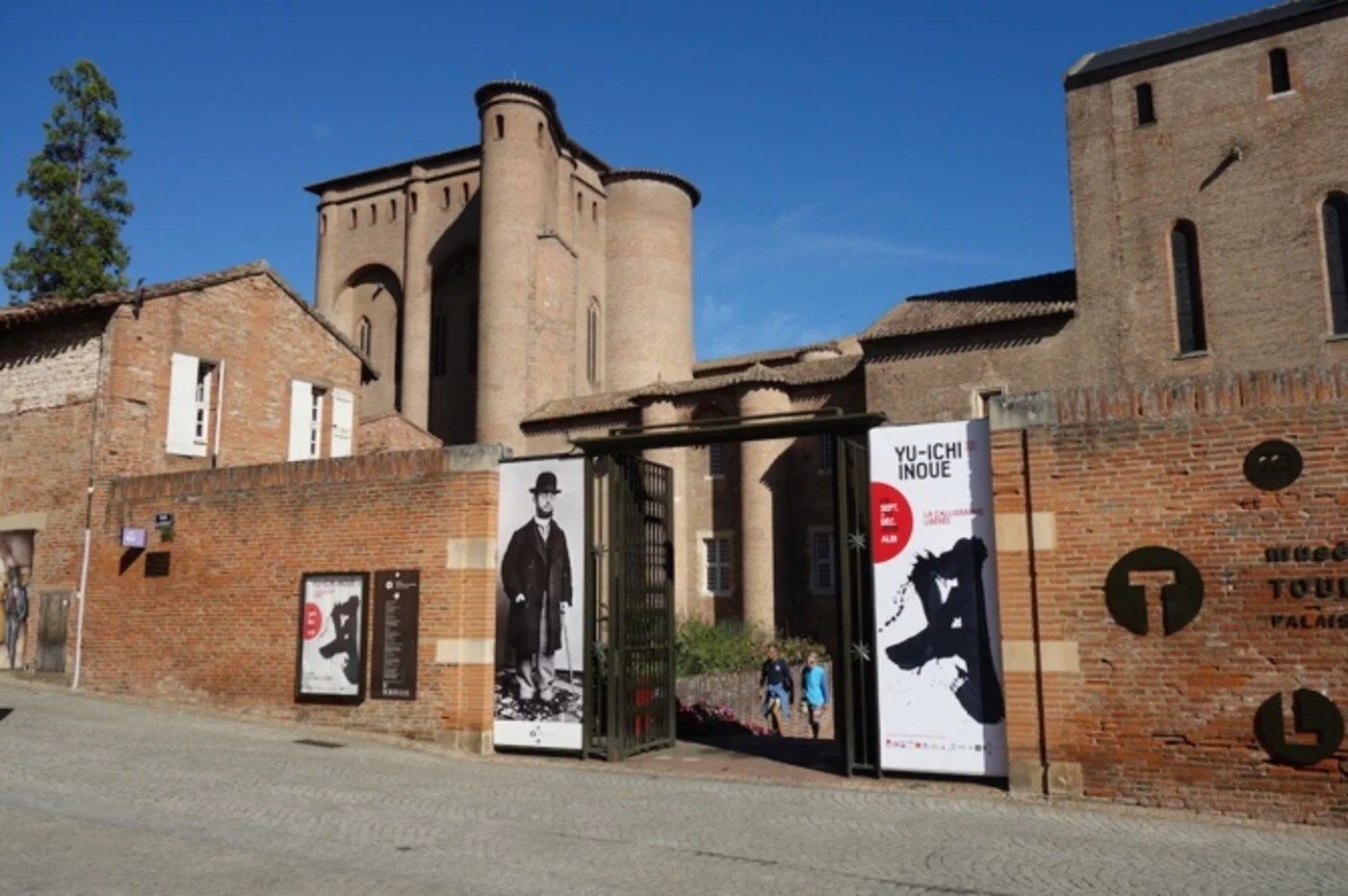
① Maison de la Culture du Japon à Paris ② Musée Toulouse-Lautrec, Albi
① July 14 – September 15, 2018 ② September 29 – December 17, 2018
As part of Japonismes 2018: les âmes en résonance, a national cultural program marking the 160th anniversary of Japan-France diplomatic relations, a solo exhibition of Yu-ichi Inoue’s work was held at the Maison de la Culture du Japon à Paris under the official “Exhibitions” category (A-5). After its Paris run, the exhibition traveled to the Musée Toulouse-Lautrec in Albi. Once selected as an official program, the content of the exhibition — including the selection and organization of works — was planned jointly by curator Yuji Akimoto, the Japan Foundation, and Kami Ya. With special cooperation from The National Museum of Modern Art, Kyoto, Kami Ya was also one of the principal lenders of calligraphy works. The exhibition drew a combined total of 34,621 visitors across both venues, and 92% of visitors surveyed reported being “satisfied” with the exhibition.
Exhibition Overview
Exhibition Title | YU-ICHI INOUE — la calligraphie libérée (lit. “Calligraphy Liberated”)
Dates | ① Paris: July 14 (Sat) – September 15 (Sat), 2018 ② Albi: September 29 (Sat) – December 17 (Mon), 2018
Venues | ① Maison de la Culture du Japon à Paris ② Musée Toulouse-Lautrec, Albi, France
Works | 76 calligraphy works plus 17 related items — 93 items in total
Organizers | The Japan Foundation, Musée Toulouse-Lautrec (Albi venue)
Special Cooperation | The National Museum of Modern Art, Kyoto
Cooperation | UNAC TOKYO, World Paper Culture Heritage Support Foundation Kamimori, All Nippon Airways (ANA)
Curator | Yuji Akimoto (Director, Tokyo University of the Arts University Art Museum; Director, Nerima Art Museum)
Total Visitors | Paris: 11,597 Albi: 23,024 Combined: 34,621
Catalogue | 2,500 copies printed, priced at €19, 144 pages
Significance of the Exhibition
An Official Program of the National Cultural Initiative “Japonismes 2018”
Japonismes 2018: les âmes en résonance was a major joint Japan-France cultural and artistic initiative, whose implementation was agreed upon by Prime Minister Shinzo Abe and then-President François Hollande of France in May 2016. Unfolding over roughly eight months across more than 20 venues in and around Paris, this exhibition was selected as one of 15 programs in the official “Exhibitions” category (A-5). Presented alongside programs dedicated to Tadao Ando, Ito Jakuchu, the Rimpa school, and Tsuguharu Foujita, the exhibition positioned Yu-ichi Inoue’s calligraphy as a representative voice of Japanese contemporary art within this national cultural initiative.
Special Cooperation from The National Museum of Modern Art, Kyoto
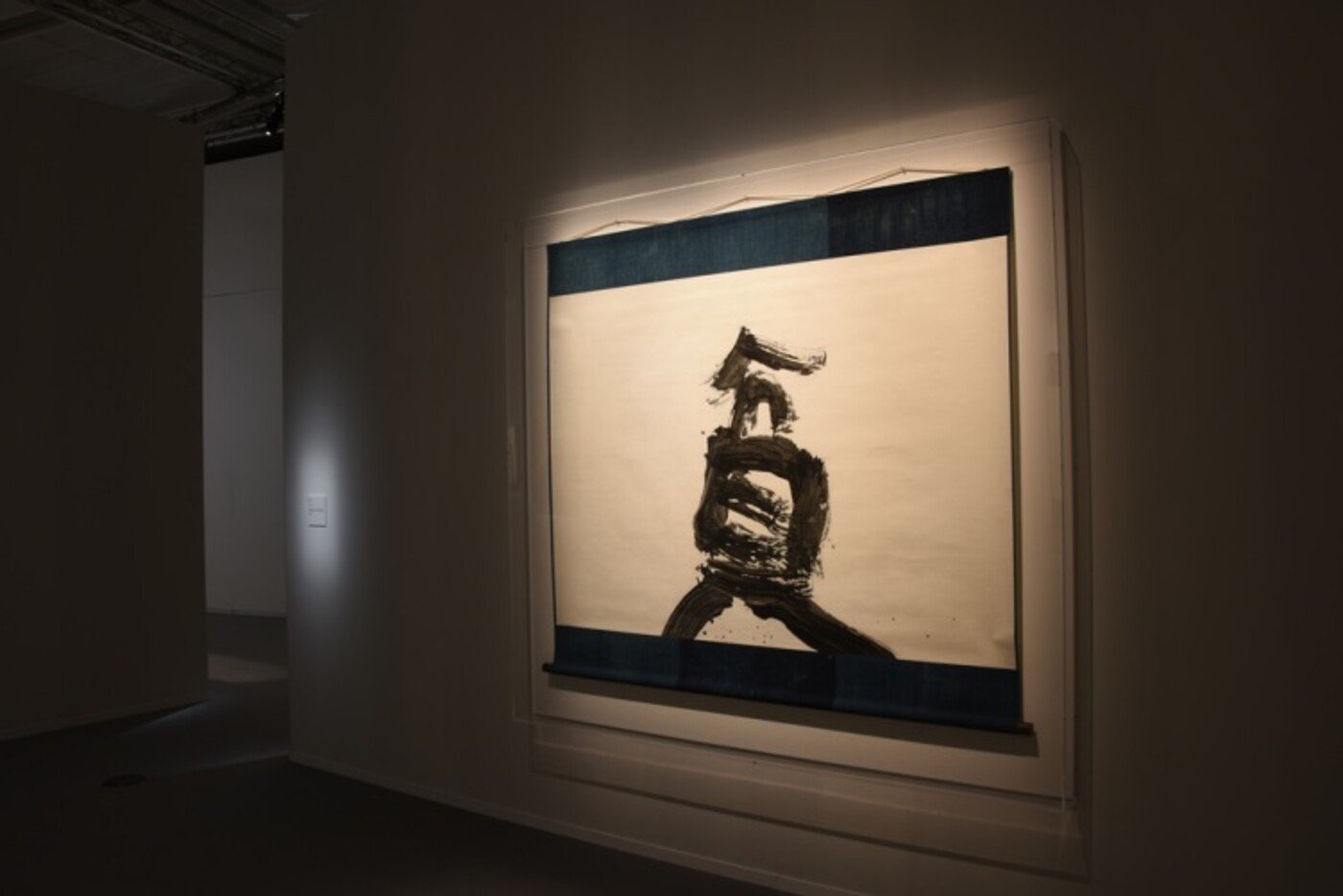
Many of the works on view belong to the collection of The National Museum of Modern Art, Kyoto, credited as providing “special cooperation” for the exhibition. Signature works from the museum’s collection, including Muga (1956) and Hin (1972), formed the backbone of the exhibition.
A Two-Venue Structure: Paris to Albi
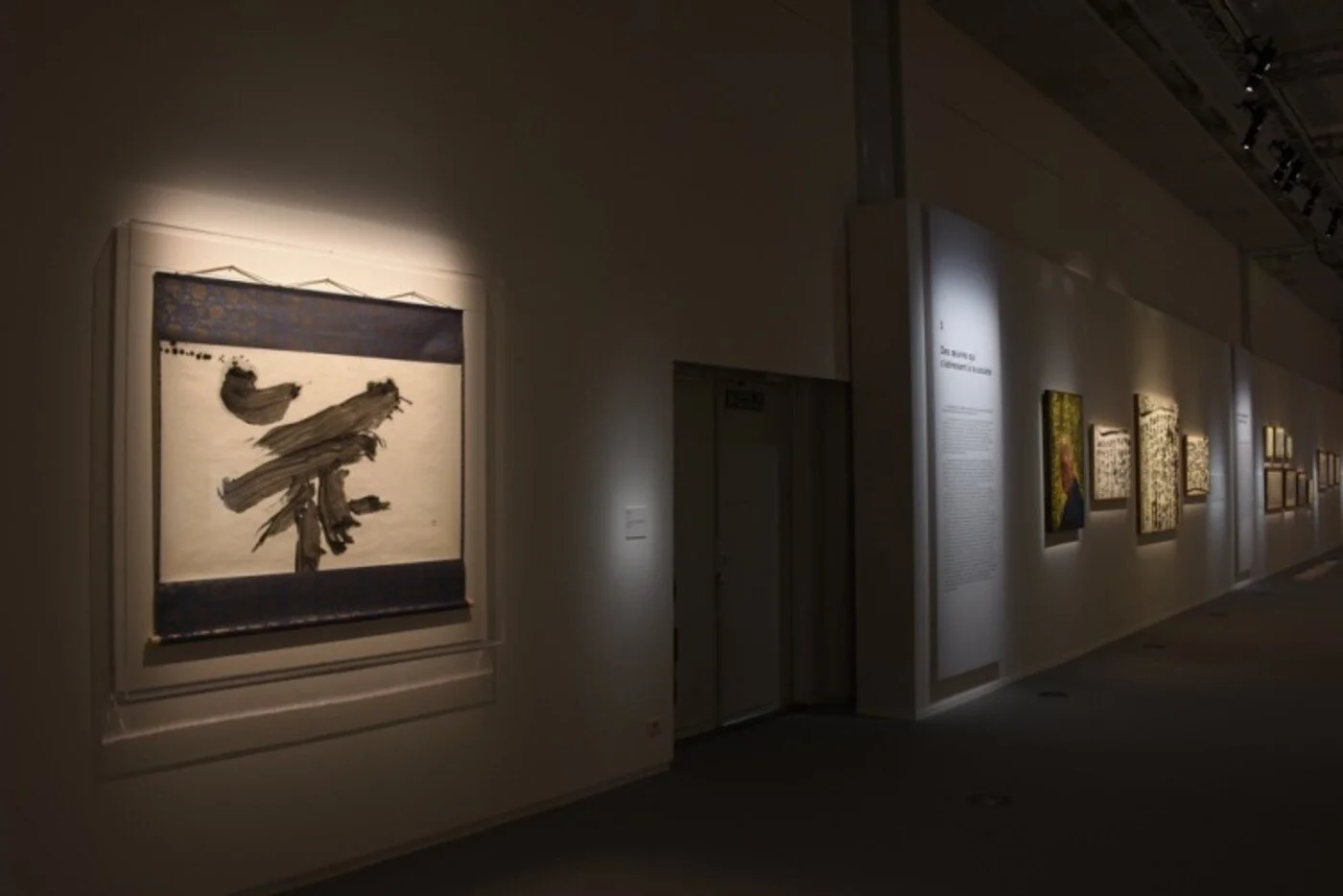
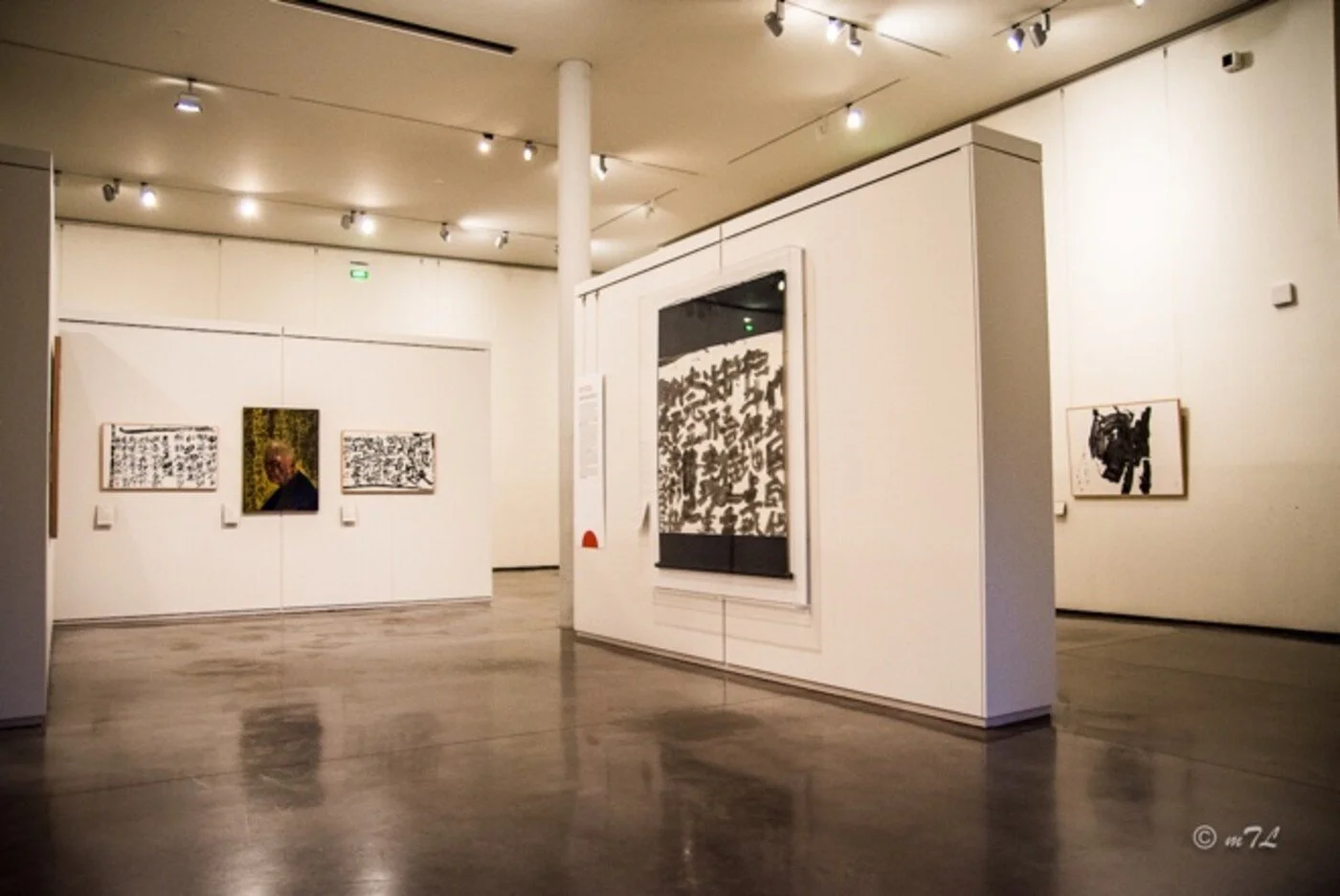
After its run at the Maison de la Culture du Japon à Paris, the exhibition traveled to the Musée Toulouse-Lautrec in Albi — extending its reach beyond a single overseas museum to a regional French city as well. In Albi, the selection of works and the layout of the exhibition walls were reorganized to suit the scale of the venue.
Media Coverage and Visitor Response
According to the Japan Foundation’s report, the exhibition received 48 print media mentions in France (including Arte Journal and La Croix), 7 radio and television features (including Arte), and 50 web mentions. In Japan, coverage included 9 print mentions (including Bijutsu Techo, Art Collectors’, Nikkei Shimbun, and Mainichi Shimbun), 1 television feature (NHK’s Art Scene), and 13 web mentions.
In visitor surveys, 92% reported being “satisfied with the exhibition,” and approximately 97% said they “wanted to learn more about Japan.” Comments included: “A beautiful exhibition that let me discover calligraphy,” and “I felt that Inoue spoke of his philosophy of life through calligraphy.”
Works on View
The exhibition list was organized into five thematic groups.
· 1. Sparse-character and single-character works (characters as form, where art and calligraphy meet)
· 2. Image and word (images and language)
· 3. Multi-character works 1: words addressed to society (agitation, wartime experience, and calligraphy)
· 4. Multi-character works 2: testamentary words (death poems and related works)
· 5. Word-writing: the words of modern poetry and fairy tales (word-writing and recitation)
Representative Works
Muga A | 1956, glue and ink on paper | Collection of The National Museum of Modern Art, Kyoto
Hin | 1972, sumi ink on paper | Collection of The National Museum of Modern Art, Kyoto
Ā Yokokawa Minkoku Gakkō | 1978, sumi ink on paper | Gunma Museum of Modern Art / private collection (2 works)
Bukkō Kokushi Ge | 1980, sumi ink on paper | Collection of The National Museum of Modern Art, Kyoto
Miyazawa Kenji tales: Yodaka no Hoshi (series) | 1984, conte on paper | Collection of The National Museum of Modern Art, Kyoto, and others
Miyazawa Kenji tales: Nametokoyama no Kuma (series) | 1984–85, charcoal on paper | Collection of The National Museum of Modern Art, Kyoto, and others
In addition to the above, related items on view included brushes used by Inoue during his lifetime, the complete three-volume raisonné of his work, a portrait photograph by Kazumi Kuriage, and a rug from his studio (shown only at the Albi venue).
Related Programs
A supplementary teaching booklet in French was produced, and educational outreach programs were held for middle and high school students. A press conference was also held, and the exhibition received wide coverage in both French and Japanese media.
About the Artist
Yu-ichi Inoue (1916–1985) was a calligrapher who represented Japan’s postwar contemporary art scene. He brought calligraphy — the art of paper and ink — to full flower as a form of individual expression within the context of contemporary art. While working as a schoolteacher for 41 years, he continued to create, and remains one of the few Japanese artists to have gained international recognition at a remarkably early stage.
Exhibition Photographs
Photos courtesy of the Japan Foundation, from the “Japonismes 2018: Yu-ichi Inoue” report (6 from Paris, 2 from Albi)