Yu-ichi Inoue: The Profundity of Ink, Shanghai Powerlong Museum
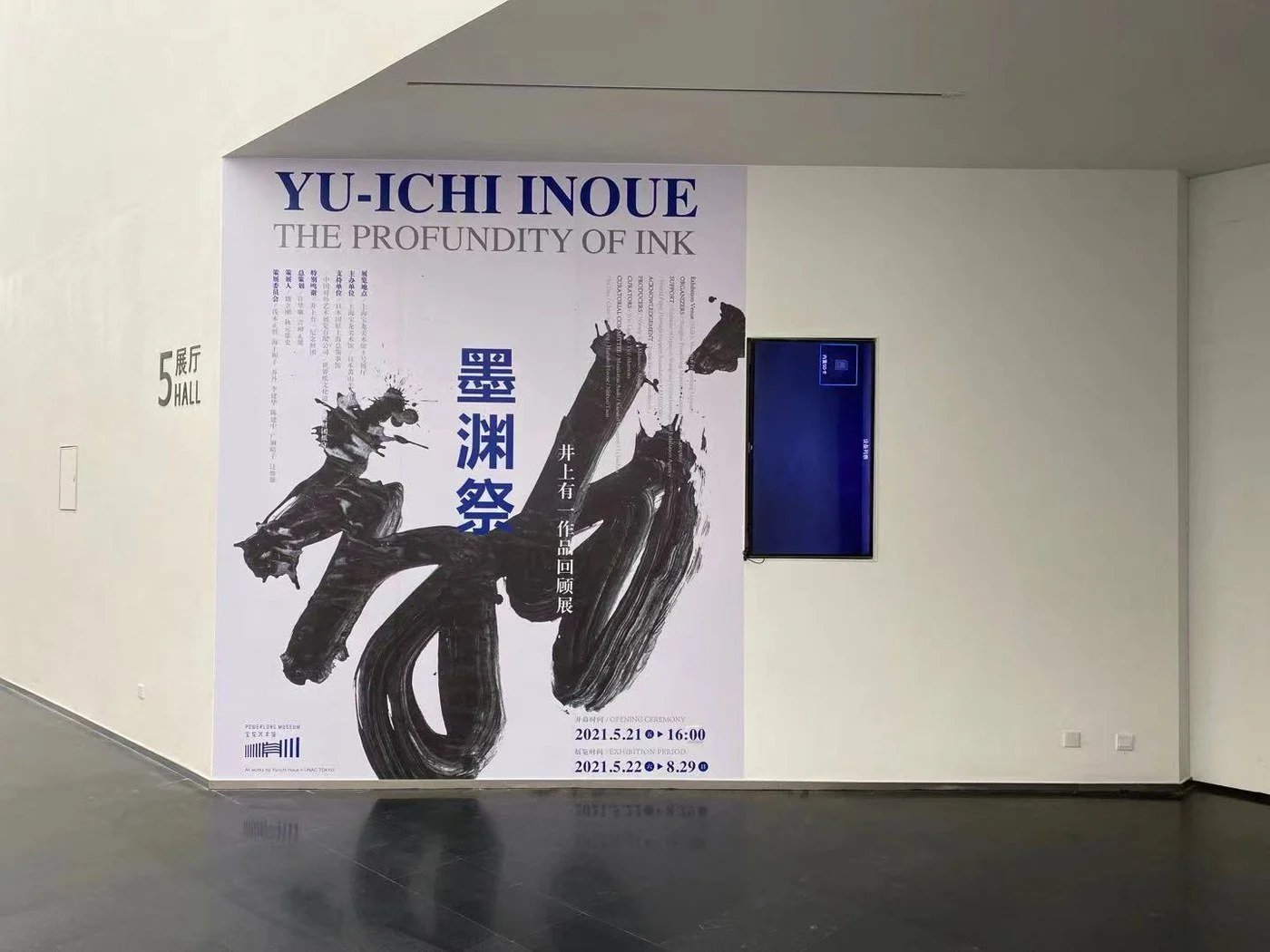
YU-ICHI INOUE: The Profundity of Ink / Shanghai Powerlong Museum | 21 May – 29 August 2021 | approx. 78 works (estimated)
Held as the first stop in the Chinese touring exhibition following Tsinghua University Art Museum’s “Bell Tolls from Japan,” with the Kamimori Foundation, established by Kami Ya, taking part as a supporting organisation.
Exhibition Overview
Dates | 21 May (Fri) – 29 August (Sun) 2021
Venue | Shanghai Powerlong Museum (Shanghai, China)
Works on view | approx. 78 (estimated)
Organiser | Shanghai Powerlong Museum
Support | Kamimori Foundation for the Preservation of World Paper Culture (established by Kami Ya)
Touring exhibition | First stop in the Chinese tour of Tsinghua University Art Museum’s “Bell Tolls from Japan” (Nov 2020 – Mar 2021)
Significance of the Exhibition
First Stop of the Chinese Touring Exhibition
“Bell Tolls from Japan,” held at Tsinghua University Art Museum in Beijing from November 2020, drew approximately 80,000 visitors before closing. Several museums across China proposed hosting a touring version, and this exhibition was realised as the first such stop. With a run of roughly 100 days, it offered a valuable opportunity to introduce Yu-ichi Inoue’s work to audiences within China at a time when international travel was difficult due to the pandemic.
A Critical Perspective of “Depth, Density, Purity”
Chinese contemporary calligrapher Wei Ligang contributed a critical essay, “The Profundity of Ink,” written for the exhibition, discussing Inoue’s calligraphy in terms of three qualities: depth (immersion in Chinese calligraphic tradition), density (the concentration of Zen and visceral intensity), and purity (the elevation that transformed the essence of Chinese calligraphy into a contemporary idiom). It stands as a primary source illustrating how Yu-ichi Inoue has been received within Chinese calligraphic circles.
Continuity with the Tsinghua Exhibition
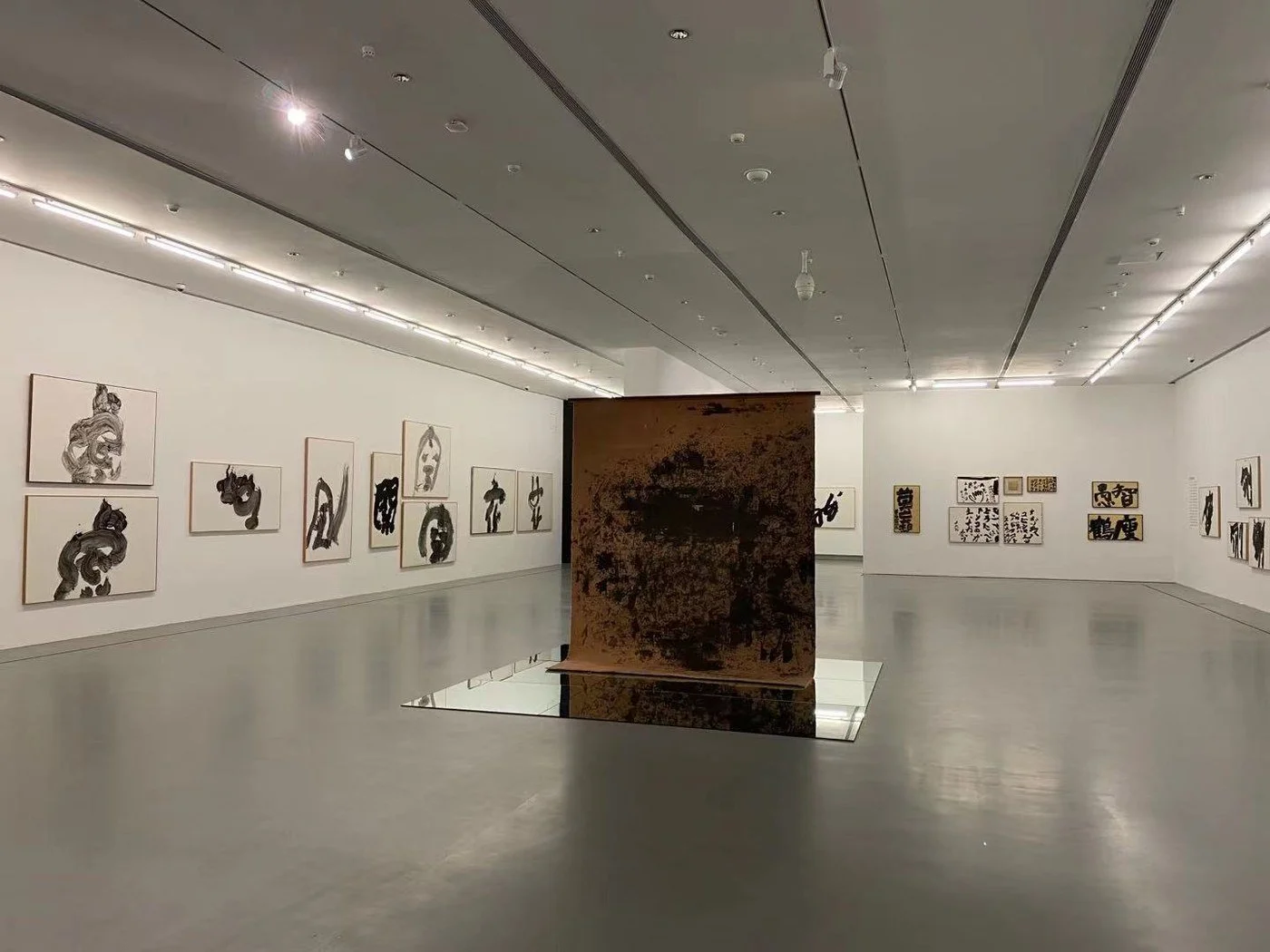
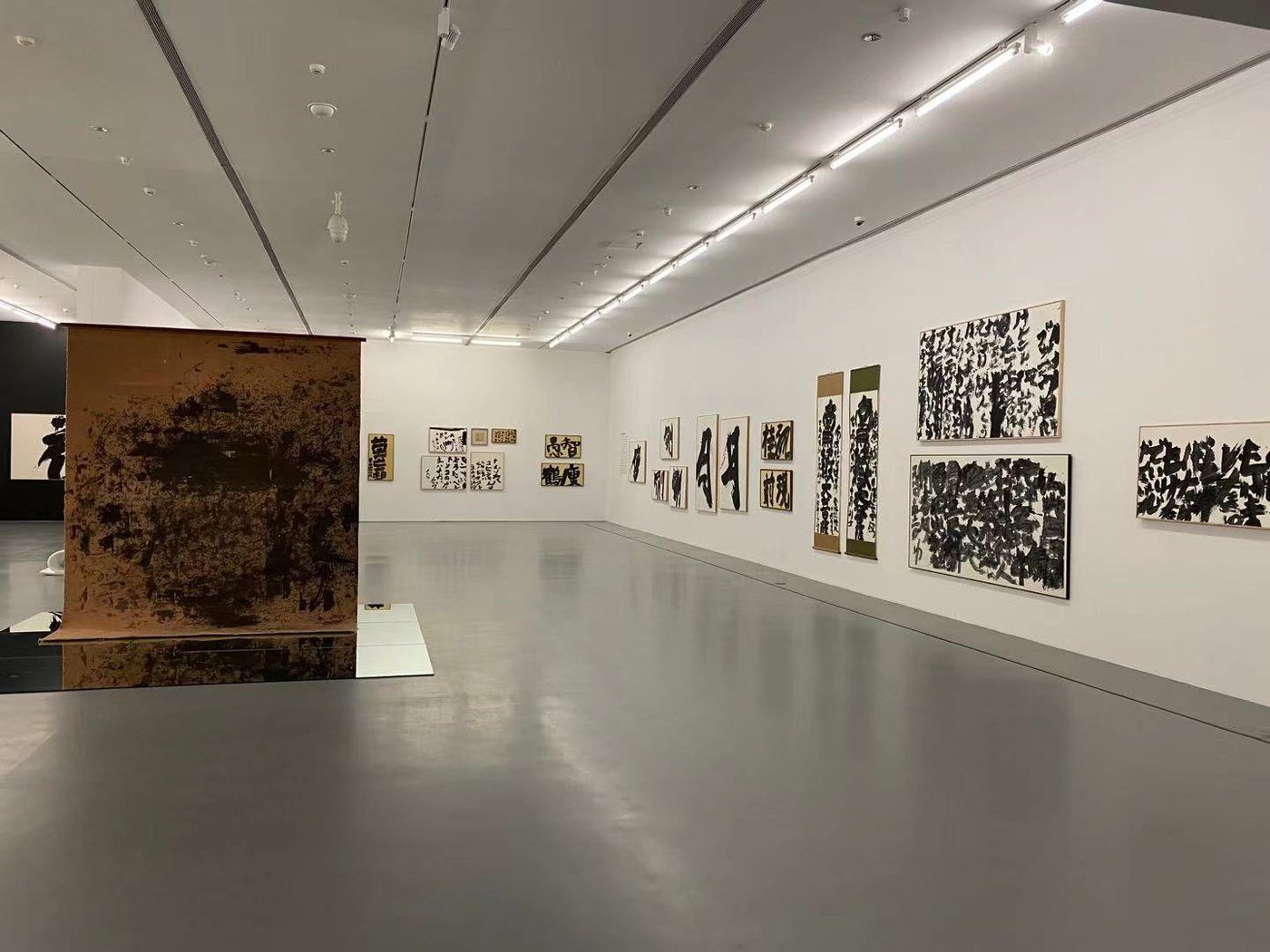
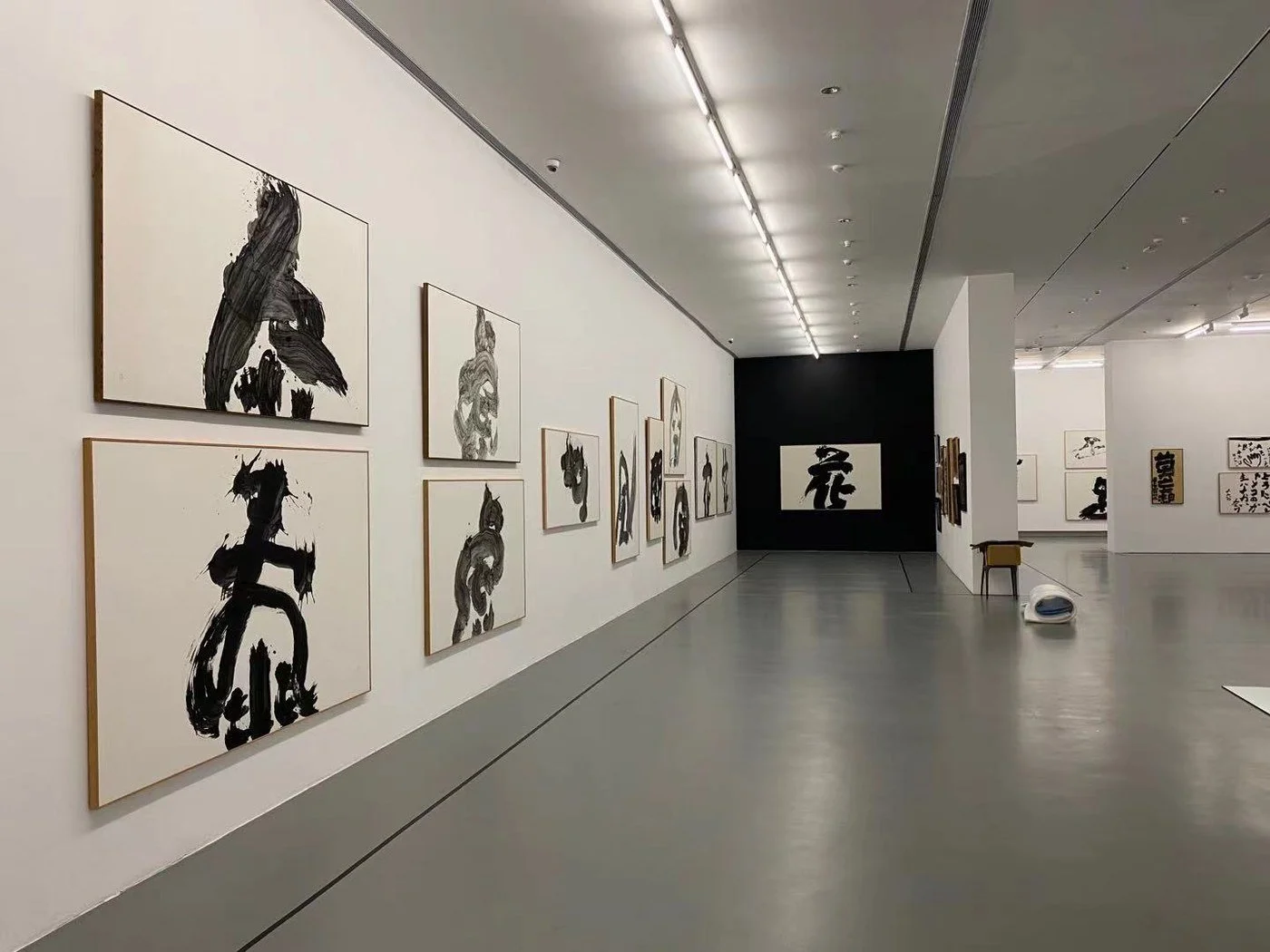
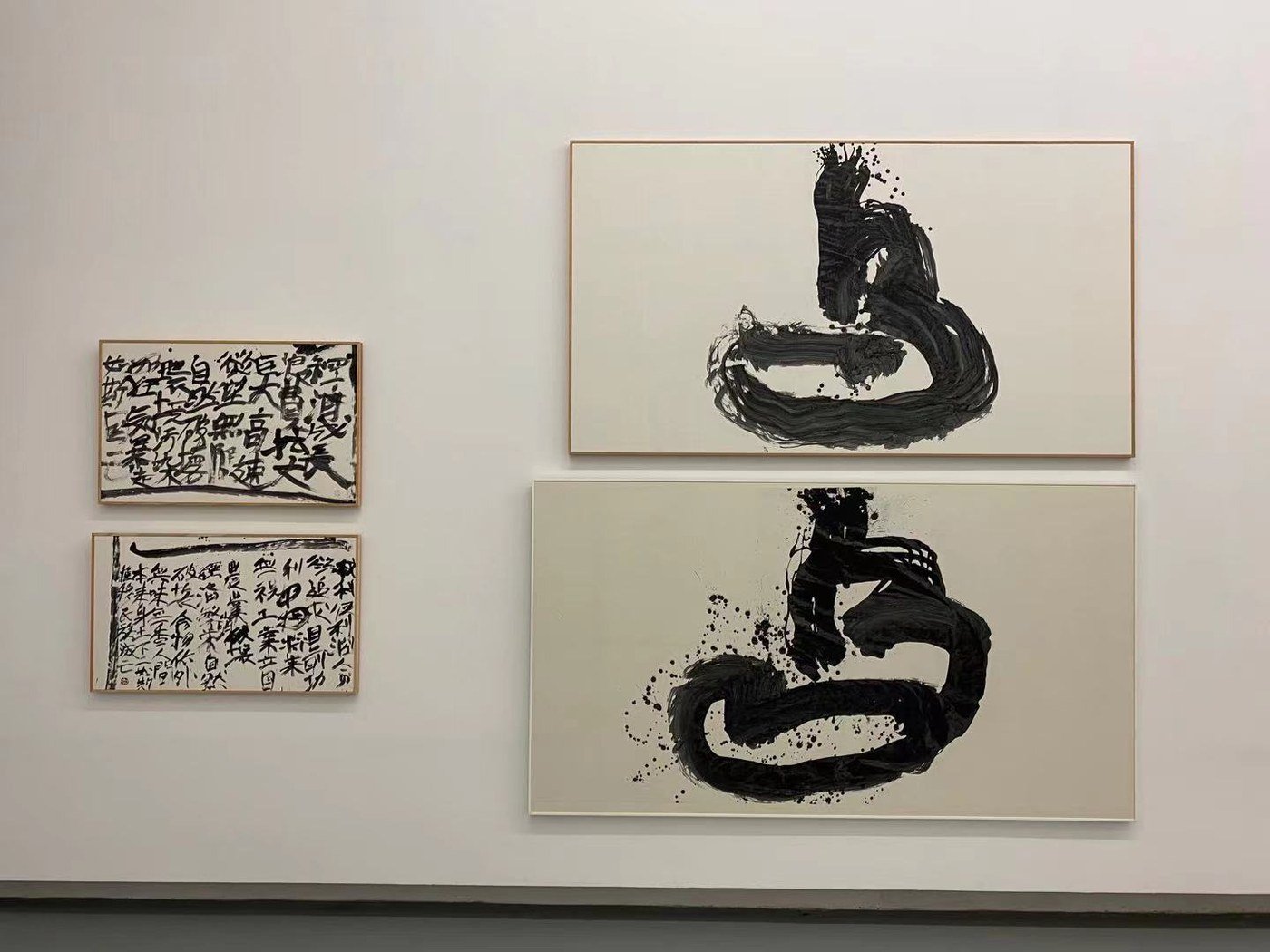
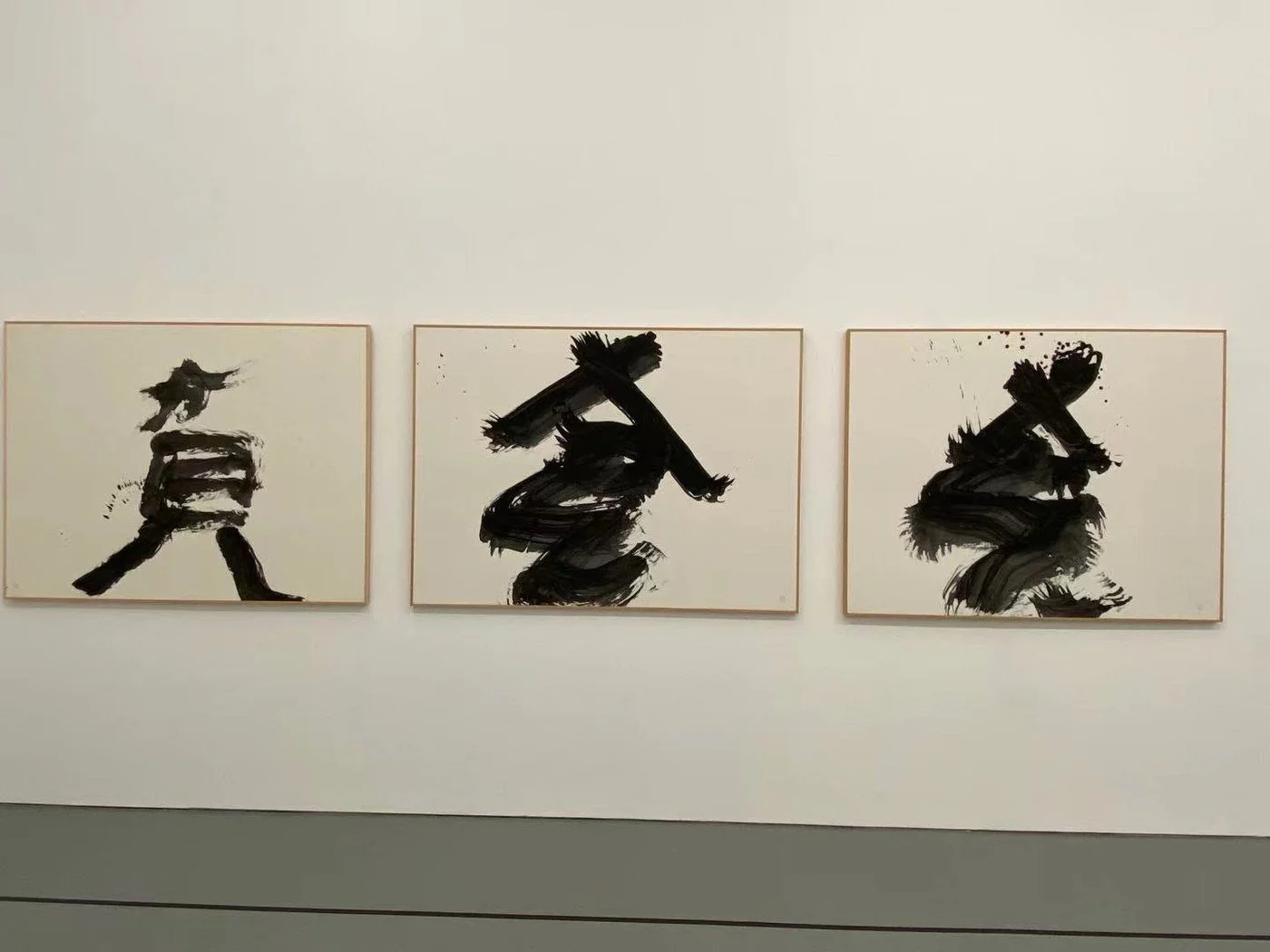
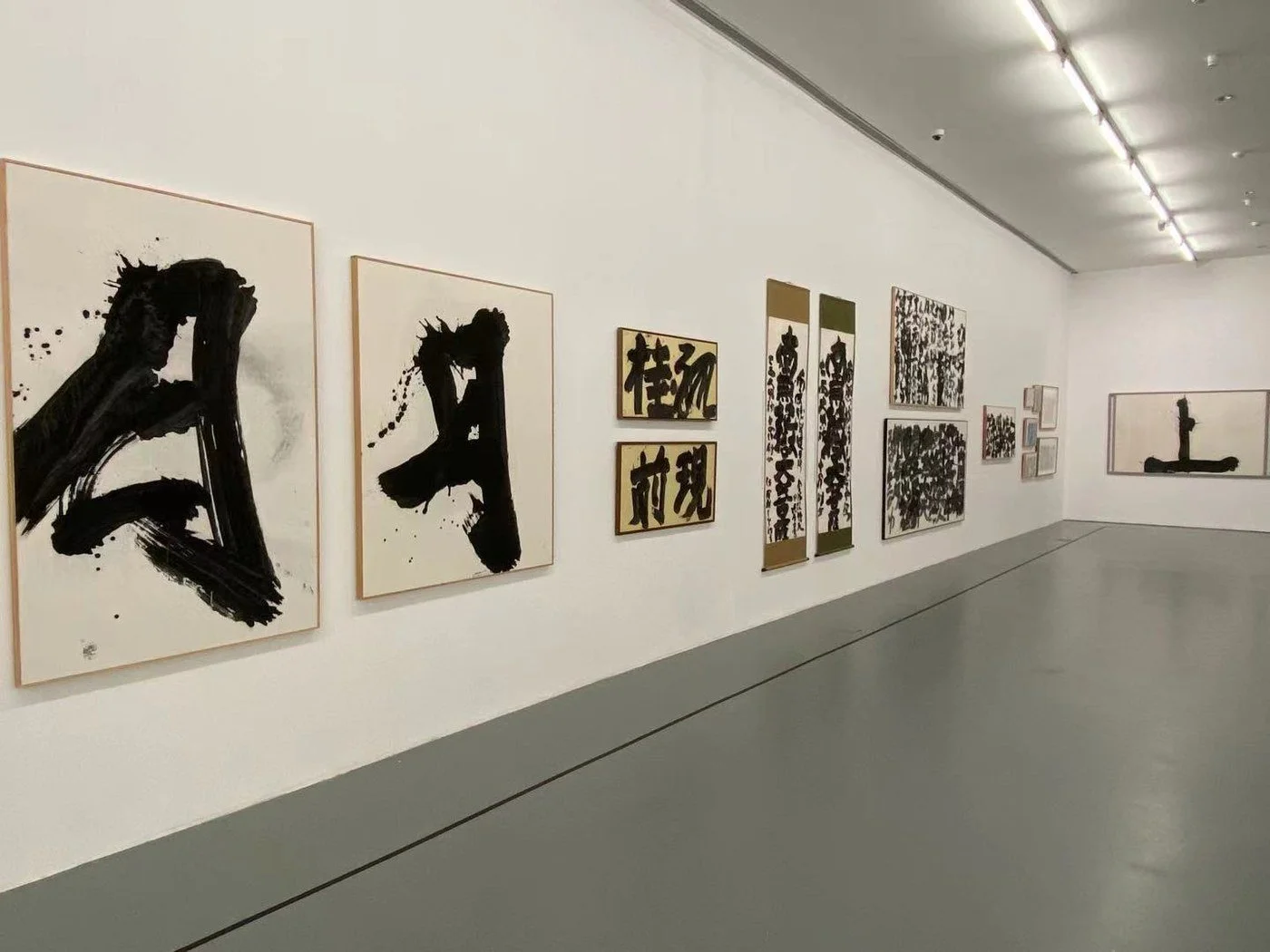
The works travelled directly from Tsinghua University Art Museum to Shanghai Powerlong Museum, meaning the same body of work was shown continuously within China — a defining feature of this exhibition. The display followed the same organising principles as Tsinghua, grouping works by period (such as the 1950s and 1970s) and by script format (single-character and multi-character works).
Kami Ya’s Role
In this exhibition, Kami Ya and the foundation it established played the following roles: the Kamimori Foundation for the Preservation of World Paper Culture (established by Kami Ya) took part as a supporting organisation; the Foundation’s Representative Director, Haruko Hirose, served on the organising committee; and Kami Ya lent works for the exhibition.
Works on View
Approximately 78 works were on view (estimated), selected from the Tsinghua exhibition’s checklist in consideration of the venue’s spatial constraints. Details of representative works will be added once confirmed.
About Yu-ichi Inoue
Yu-ichi Inoue (1916–1985) was a leading calligrapher of postwar Japanese contemporary art. He developed “sho” (calligraphy) made of paper and ink into a form of individual expression within the context of contemporary art. He continued to work while teaching for 41 years, and remains one of the few Japanese artists to have gained international recognition at a remarkably early stage.
Installation Views
Photography: Shanghai Powerlong Museum.